
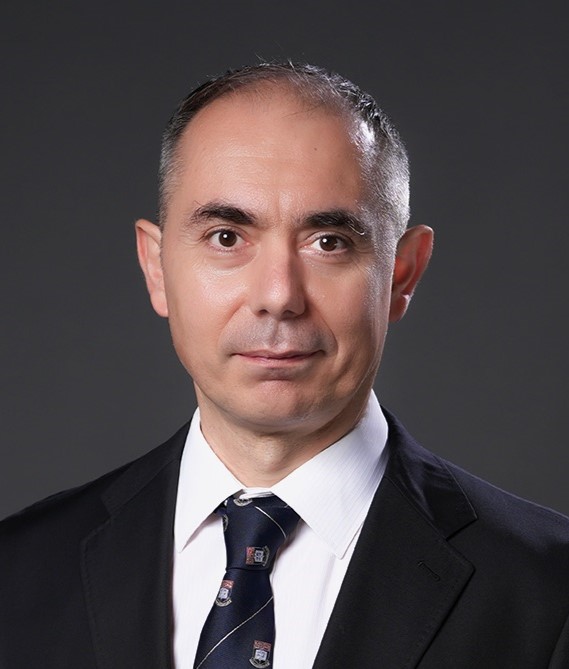
 | Prof. Graziano ChesiThe University of Hong Kong, China Graziano Chesi is a full professor at the Department of Electrical and Electronic Engineering of the University of Hong Kong. He received the Laurea in Information Engineering from the University of Florence and the PhD in Systems Engineering from the University of Bologna. He served as associate editor for various journals, including Automatica, the European Journal of Control, the IEEE Control Systems Letters, the IEEE Transactions on Automatic Control, the IEEE Transactions on Computational Biology and Bioinformatics, and Systems and Control Letters. He founded the Technical Committee on Systems with Uncertainty of the IEEE Control Systems Society. He also served as chair of the Best Student Paper Award Committees of the IEEE Conference on Decision and Control and the IEEE Multi-Conference on Systems and Control. He authored the books "Homogeneous Polynomial Forms for Robustness Analysis of Uncertain Systems" (Springer, 2009), "Domain of Attraction: Analysis and Control via SOS Programming" (Springer, 2011) and "LMI-Based Robustness Analysis in Uncertain Systems" (Now Publishers, 2024). He is a Fellow of the IEEE, AAIA and AIIA. Speech Title: Economical, Optimal and Uncertain Multiple-View L2 Triangulation via LMIs |
 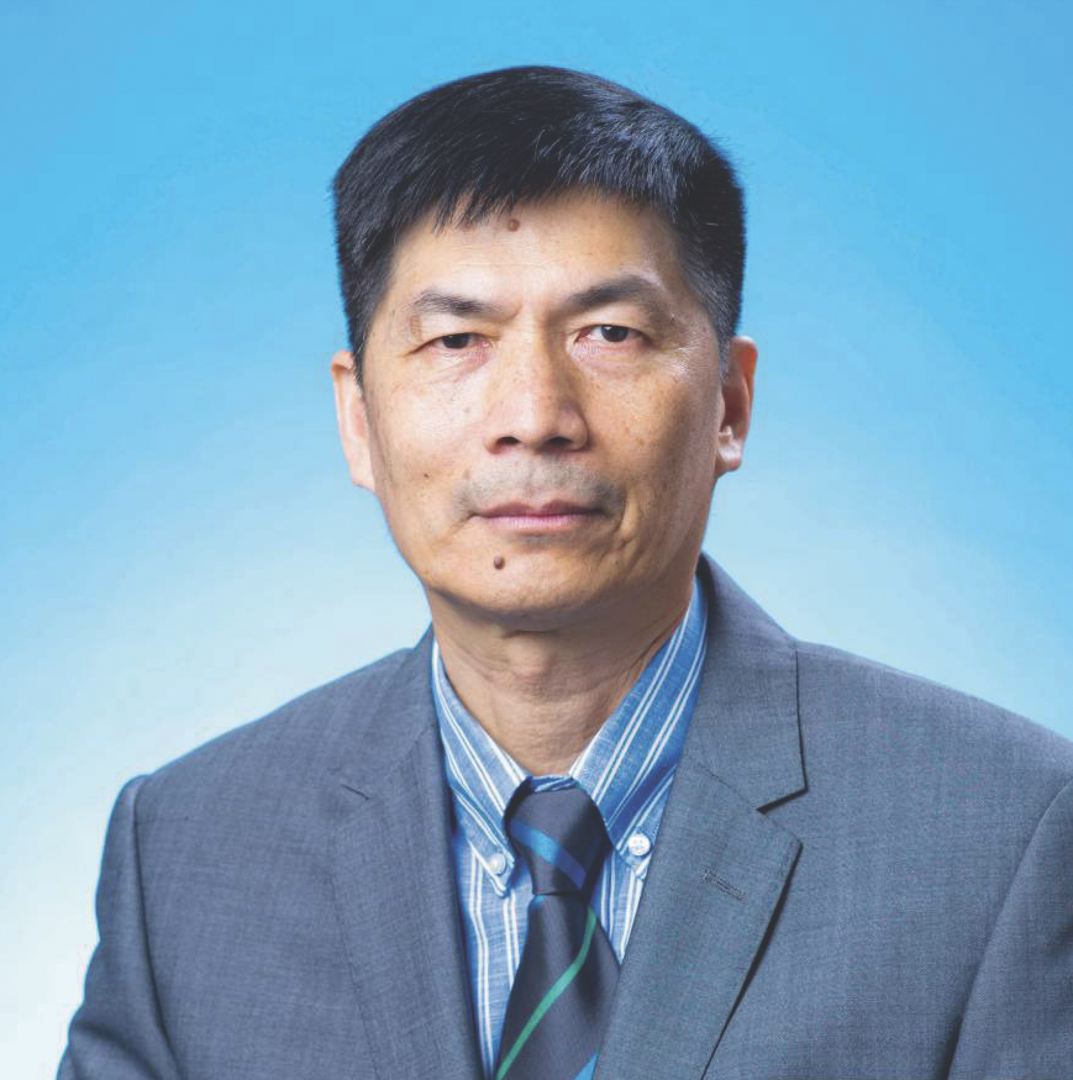 | Prof. You-fu LiCity University of Hong Kong (Dongguan), China You-Fu Li received the PhD degree in robotics from the Department of Engineering Science, University of Oxford in 1993. From 1993 to 1995 he was a research staff in the Department of Computer Science at the University of Wales, Aberystwyth, UK. He joined City University of Hong Kong in 1995 and is currently professor in City University of Hong Kong (Dongguan). His research interests include robot sensing, robot vision, and visual tracking. In these areas, he has published over 400 papers including over 200 SCI listed journal papers. Dr Li has received many awards in robot sensing and vision including IEEE Sensors Journal Best Paper Award by IEEE Sensors Council, Second Prize of Natural Science Research Award by the Ministry of Education, 1st Prize of Natural Science Research Award of Hubei Province, 1st Prize of Natural Science Research Award of Zhejiang Province, China. He was on Top 2% of the world’s most highly cited scientists by Stanford University, 2020- and Career Long. He has served as an Associate Editor for IEEE Transactions on Automation Science and Engineering (T-ASE), Associate Editor and Guest Editor for IEEE Robotics and Automation Magazine (RAM), and Editor for CEB, IEEE International Conference on Robotics and Automation (ICRA). He is a fellow of IEEE. Speech Title: Vision calibration and tracking for robotic applications |
 | Prof. David ZhangChinese University of Hong Kong (Shenzhen), China David Zhang is a Distinguished Presidential Chair Professor at Chinese University of Hong Kong (Shenzhen). Since 2005, he has served as a Chair Professor, Department Head, and Emeritus Chair Professor at Hong Kong Polytechnic University. He is the founder and Editor-in-Chief of the International Journal of Image & Graphics (IJIG) and Springer International Book Series on Biometrics (KISB). With over 40 years of experience in pattern recognition and biometrics, he is a pioneer and leading in some fields such as palmprint recognition, the quantification of the four diagnostic methods in TCM, and facial aesthetics analysis. His research achievements have garnered numerous awards, including Gold Medals for inventions from China and South Korea, a Silver Medal at the Geneva International Exhibition of Inventions, the Wu Wenjun Artificial Intelligence Science and Technology Contribution Award in China, and the Hong Kong SAR’s highest science and technology award. He has published 30+ monographs, 500+ high-level international journal papers, and holds 70+ patents across the US, Japan, and China. He has been named a Highly Cited Researcher for eight consecutive years; he ranks 44th globally and 5th in China among computer scientists (Research.com) in 2026. Professor Zhang is a Fellow of both the Royal Society of Canada and the Canadian Academy of Engineering. He also is an IEEE Life Fellow and an IAPR/AAIA/AIIA Fellow. Speech Title: Advanced Biometric Research and Developments |
 | Prof. Chi-Man PunUniversity of Macau, China Chi-Man Pun received his Ph.D. degree in Computer Science and Engineering from the Chinese University of Hong Kong in 2002, and his M.Sc. and B.Sc. degrees from the University of Macau. He served as the Head of the Department of Computer and Information Science at the University of Macau from 2014 to 2019, and is currently a Professor with the Department of Artificial Intelligence and Department of Computer Science and in charge of the Image Processing and Pattern Recognition Laboratory at the Faculty of Information Science and Computing. He has authored/co-authored more than 300 refereed papers in many top-tier Journals (including TPAMI, TIFS, TIP, TDSC, TKDE, and TMM) and Conferences (including CVPR, ICCV, ECCV, AAAI, NeurIPS, ICML, ICDE, MM, and VR), and co-invented several China/US Patents. He is also the recipient of the Macao Science and Technology Award 2014 and the Best Paper Award in the 6th Chinese Conference on Pattern Recognition and Computer Vision (PRCV2023). Dr. Pun has served as the General Chair/Co-Chair/Program Chair for many international conferences, and regularly serves as the Area Chair (NeurIPS, MM, BMVC) / Senior Program Committee (AAAI, IJCAI) for many top-tier conferences (2021-now). He is currently serving as the Editorial Board member for the journal of Artificial Intelligence (AIJ, 2024-now). Besides, he has been listed in the World's Top 2% Scientists by Stanford University since 2020. His research interests include Image Processing and Pattern Recognition; Multimedia and AI Security; Medical Image Analysis, etc. Speech Title: Object Segmentation with Test-Time Training Models |
 | Assoc. Prof. Qifeng ChenThe Hong Kong University of Science and Technology, China Qifeng Chen is an Associate Professor at the Hong Kong University of Science and Technology. He received his PhD in Computer Science from Stanford University. His research interests include generative AI, computational photography, and embodied AI. He was named one of the "35 Innovators Under 35" and one of the top 100 AI young pioneers in China by MIT Technology Review. He received the Google Faculty Research Award. He served as an area chair for international conferences, including CVPR, NeurIPS, ICCV, ECCV, ACM Multimedia, and ICML. He is also serving as an associate editor of TPAMI and ACM Computing Surveys. Speech Title: Controllable Video Generation: From Visual Synthesis to Interactive World Models |